
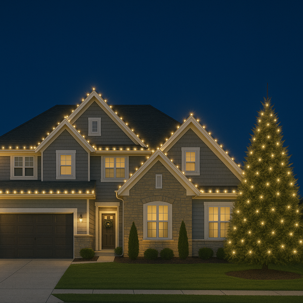
Every year, October arrives and phones light up across Boise and the Treasure Valley for holiday-light installs. By then, crews are already deep into full schedules and the prime dates are gone. The best way to avoid the scramble is simple: book early and understand the timing, safety, and energy factors that shape the season.
Why early booking matters
Professional installs aren’t a quick add-on. A clean, safe display requires custom-cut roofline wire, correct load planning, ladder/roof work, and weather-rated components. Securing a slot in September or early October gives you more design options and ensures you’re glowing before Thanksgiving. It also lets your installer target mild fall weather windows, which improves both safety and speed.
Weather timing in the Treasure Valley
Boise’s autumn typically brings comfortable working days - until the first freezes arrive around mid-October on average. Once freezing nights and early snows hit, installs take longer, roofs get slick, and schedules tighten. Booking before those thresholds means a cleaner, safer, and more predictable outcome for everyone.
New materials shaping the season
LEDs have become the default for outdoor displays. They use far less electricity than incandescent bulbs, run cooler, and come in warm white (for a candle-glow look) or vivid multi-color for a classic family vibe. Pair LEDs with dusk-to-dawn or timer controls to keep the look consistent while trimming energy automatically.
Smart tech and automation
Modern controllers let you adjust brightness, schedule on/off times, and even switch color themes from a phone - no re-hanging required. For most homes, the biggest payoff is simple automation: set lights to come on at dusk and shut off around midnight, then forget it for the rest of the season.
Safety (and why pros help)
Holiday decorating brings a seasonal spike in ladder and electrical injuries. Pros bring the right ladders, fall-safe practices, GFCI-protected power, and outdoor-rated components - especially important once temperatures drop. If you have steep pitches, high peaks, or limited exterior outlets, a professional plan prevents risky improvisation and protects gutters, siding, and landscaping.
A month-by-month Boise timeline (educational plan you can follow)
• August - Plan & power. Do a quick design consult and choose bulb styles (C7 for rooflines; minis for shrubs/trees). Confirm outdoor-rated outlets/GFCI and note any extension runs. Ask your installer about product ratings (outdoor/wet-location) and the safety standard that applies to seasonal vs. year-round strings.
• September - Book & order. Reserve your install week before the calendar fills. Approve a cut-to-fit layout so seams land at natural breaks (downspouts, peaks). Add a timer or dusk sensor to automate on/off.
• Early October - Prime install window. Historically mild days mean faster, safer ladder/roof work. Verify load planning; keep conductors off sharp edges; use outdoor-rated cords only. Document the pattern (for example, “2 red / 3 warm white”) so re-installs look identical each year.
• Late October to mid-November - Polish & maintain. Replace any weak bulbs and secure clips before storms. Do a quick photo check from the street at dusk to confirm symmetry.
• Late November to December - Enjoy & schedule take-down. Let automation run (dusk to ~midnight) to save energy. Pre-book tear-down and storage so next season is faster and cleaner.
Quick planning checklist
• Book in September or early October to secure premium dates and mild-weather windows.
• Choose LED over incandescent for efficiency, durability, and lower heat.
• Add a dusk sensor or timer; consider a simple smart controller if you want theme changes without re-installing.
• Ask about product ratings (outdoor/wet-location) and the standard used for seasonal vs. longer-term/“permanent” strings.
• If you’re considering year-round lighting, make sure the product is evaluated for extended outdoor exposure - not just seasonal sets.
Sources
• U.S. DOE Energy Saver — LED holiday lights & timer controls: https://www.energy.gov/energysaver/fall-and-winter-energy-saving-tips
• U.S. DOE — LED Lighting (efficiency/longevity basics): https://www.energy.gov/energysaver/led-lighting
• U.S. Consumer Product Safety Commission — Holiday decorating injuries & safety tips: https://www.cpsc.gov/Safety-Education/Safety-Education-Centers/Holiday-Safety
• National Weather Service (NWS) Boise — Climate resources / freeze timing context: https://www.weather.gov/boi/climate
• UL Solutions — Year-round vs. seasonal string-light standard (UL 588 / Supplement SD): https://www.ul.com/thecodeauthority/news/string-lights-all-year-useul-588-supplement-sd