
Last month we discussed the growing rat concerns across the Treasure Valley and what winter activity was signaling for homeowners. Now, as we move into March, we are seeing something different but related: an early seasonal shift.
Warmer-than-typical temperatures have accelerated weed growth and triggered earlier insect activity than we usually expect. That means ant calls are climbing, wasp sightings are starting sooner, and boxelder bugs and elm seed bugs are appearing weeks ahead of their traditional timeline. At the same time, rats and other rodents are transitioning out of deep winter patterns and taking advantage of new food sources and fresh harborage.
This article explains what is happening, why it matters in early spring, and what homeowners in the Treasure Valley should be watching for right now.
Why Early Warm Temperatures Change Everything
Temperature is one of the biggest drivers of pest and weed activity. When we experience extended warm stretches in late winter, soil temperatures rise earlier, insects break dormancy sooner, and weeds begin germinating ahead of schedule.
According to research from Utah State University Extension, ant colonies become active when soil temperatures consistently warm, which often coincides with early spring heat patterns. Similarly, UC IPM’s Pest Notes on ants outlines how environmental warmth directly increases foraging behavior.
Weeds respond the same way. Warmer soil encourages germination, particularly for common broadleaf weeds and grassy invaders. The University of Idaho Extension emphasizes that timing of pre-emergent control is directly tied to soil temperature, not just calendar date (University of Idaho Extension Weed Management Guide).
In short, March is behaving more like April in some neighborhoods.
Weed Growth: The First Visible Sign of Spring Shift
Many homeowners first notice the seasonal shift through landscaping. Fence lines, rock beds, and south-facing foundations are showing early breakthrough.
Why this matters:
- Early weeds create shelter and cover for insects and rodents.
- Dense growth near foundations provides protected travel routes.
- Seed production begins earlier, increasing mid-season pressure.
Weed density along structures can unintentionally create ideal nesting zones for ants and conceal burrow openings for rodents. Early intervention is typically more effective than waiting for visible overgrowth.
Ant Activity Is Climbing Early
Ant calls are increasing across Boise, Meridian, Nampa, Caldwell, and surrounding areas. Warmer soil temperatures encourage colonies to expand foraging zones. When moisture follows warmth, pressure increases further.
Common early signs:
- Small ant trails along foundations or driveways
- Activity near irrigation boxes and utility penetrations
- Ants appearing in kitchens on warmer afternoons
Research from Penn State Extension notes that spring foraging often intensifies before homeowners expect it, especially when winter temperatures fluctuate.
Early treatment focuses on interrupting colony expansion before peak reproductive cycles begin.
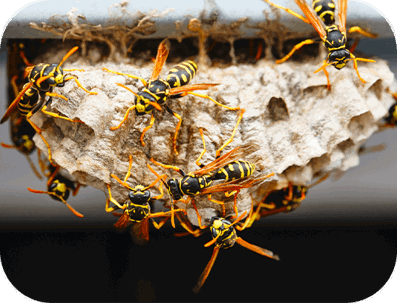
Wasps Are Emerging Ahead of Schedule
Each spring, overwintering queen wasps begin establishing new nests. When March temperatures stay elevated, queens begin scouting and building earlier.
The University of Kentucky Entomology Department explains that overwintered queens emerge with warming temperatures to initiate new colonies. Early detection of small starter nests prevents larger mid-summer populations.
Look for:
- Single wasps hovering under eaves
- Small, golf-ball sized paper nests
- Activity around sheds, patios, and play structures
Removing nests early significantly reduces seasonal escalation.
Boxelder Bugs & Elm Seed Bugs Showing Up Early
Boxelder bugs and elm seed bugs are typically associated with late summer and fall swarming, but warm spells can cause early surface activity.
According to Utah State University Extension on boxelder bugs and UC IPM guidance on nuisance invaders, these insects seek sun-warmed surfaces during temperature shifts and may become visible earlier than expected.
South- and west-facing siding often show the first clustering behavior. While not structurally damaging, large populations create significant nuisance pressure if not managed before reproduction cycles intensify.
Rats & Rodents: Transitioning From Winter to Spring
As discussed in February, winter sightings often signal established routes. March introduces a new risk layer: expanding food sources.
Spring brings:
- New plant growth and seed sources
- Increased outdoor pet feeding
- Open compost bins and garden prep
- Thickening vegetation for cover
The CDC’s rodent control guidance and EPA prevention recommendations both emphasize that habitat reduction and exclusion become increasingly important during seasonal transitions.
When vegetation thickens, travel routes become less visible. Burrows may be concealed by new growth, and roof rats in particular take advantage of trees leafing out near structures.
What Treasure Valley Homeowners Should Do in March
1) Address Early Weed Growth
- Focus on fence lines and rock beds first
- Maintain clean edges along foundations
- Reduce dense ground cover near structures
2) Monitor Ant Activity Early
- Watch for consistent trails, not isolated sightings
- Check irrigation and utility entry points
- Avoid over-the-counter over-application that scatters colonies
3) Remove Starter Wasp Nests Promptly
- Inspect eaves weekly during warm spells
- Look behind light fixtures and under patio covers
4) Reduce Rodent Harborage
- Trim back shrubs touching the home
- Store bird seed and pet food securely
- Inspect garages and sheds for droppings or gnawing
March is often the most strategic month for prevention because colonies and populations are expanding but have not yet peaked.
The Bigger Picture: Early Intervention Reduces Summer Escalation
Seasonal pressure is not just about what is visible today. Early warmth accelerates life cycles. That means:
- Earlier reproduction
- Longer breeding seasons
- More overlapping generations
- Increased summer intensity
Addressing weeds, ants, wasps, nuisance invaders, and rodent harborage now reduces compounding pressure in late spring and early summer.
If you are noticing activity earlier than usual, you are not alone. March 2026 is behaving differently — and pest patterns are responding accordingly.
Resource List
- Utah State University Extension: Ant Identification & Behavior
- UC IPM: Pest Notes – Ants
- University of Idaho Extension: Weed Management Guide
- University of Kentucky Entomology: Paper Wasps
- Utah State University: Boxelder Bugs
- CDC: Controlling Wild Rodent Infestations
- EPA: Identify and Prevent Rodent Infestations