The wildlife around your Boise home can be fun to watch, but when burrowing animals start tearing up lawns and gardens, the damage adds up quickly. Gophers, moles, and even voles can all create tunnels, mounds, and dead patches across your yard. Knowing which animal you’re dealing with is the first step toward choosing the right control method.
This guide explains how to tell gophers, moles, and voles apart, what kind of damage they cause, and what you can do to protect your lawn and landscaping across the Treasure Valley.
Gophers vs. Moles vs. Voles – What’s in Your Yard?
Although their tunnels can look similar at first glance, gophers, moles, and voles are very different animals with very different habits:
- Gophers – Rodents that feed on roots, bulbs, and plants. They create large soil mounds and can kill turf, shrubs, and young trees.
- Moles – Insect-eating mammals that tunnel just below the surface. They primarily eat grubs and worms but leave raised ridges and mounds that damage lawns.
- Voles – Small rodents that travel in shallow runways through grass and mulch, feeding on roots, stems, and bark.
Because each pest behaves differently, the most effective control for gophers may not work for moles or voles. Correct identification is critical.
Moles – Insect-Eaters That Tunnel Through Lawns
Moles are small, furry mammals with tiny eyes, nearly invisible ears, and an elongated snout. They are built for underground life and use powerful front paws to dig extensive tunnel systems.
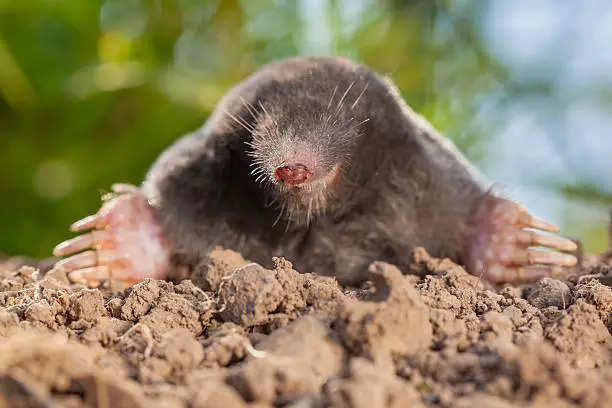
Moles dig through moist soil searching for earthworms, grubs, and insects. While they are not feeding on plants, their tunneling can cause:
- Raised, spongy ridges just below the surface
- Volcano-shaped mounds of loose soil
- Damaged turf that lifts easily from the ground
For many Boise homeowners, mole damage is mostly an appearance issue, but heavy activity can weaken turf and create uneven walking surfaces.
Pocket Gophers – Plant-Eating Burrowers
Pocket gophers are larger than moles and have visible eyes and ears, stocky bodies, and large front teeth used to chew roots and stems. They also have external cheek pouches used to carry food underground.
Gophers push soil to the surface as they dig. A classic gopher mound is a fan- or horseshoe-shaped pile of dirt with a plugged entrance.
Common gopher damage includes:
- Fresh soil mounds scattered across lawns
- Wilting or collapsing plants as roots are eaten
- Chewed bulbs, tubers, and underground stems
Because gophers feed directly on plant material, they can quickly destroy gardens, landscaping, and newly planted trees.
Voles – Surface Runways and Chewed Grass
Voles resemble short-tailed mice and create shallow runway systems just beneath the surface of lawns and garden beds.
Signs of vole activity include:
- Narrow runways through matted or dead grass
- Gnawing on stems and lower tree bark
- Patchy turf damage after snow melt
For a deeper look at vole behavior and control options, see our guide on how to get rid of voles.
How to Get Rid of Gophers & Moles
Once you know which animal is responsible, control efforts can be targeted more effectively. Common approaches include:
1. Reduce Food Sources & Shelter
- Keep lawns mowed and edges trimmed
- Remove heavy thatch, debris, and dense groundcover
- Address grub problems to discourage moles
2. Trapping
Trapping is one of the most reliable control methods when placed correctly.
- Moles: Traps placed in active surface tunnels
- Gophers: Traps set inside main tunnels accessed from fresh mounds
Improper placement can waste time and increase risk around pets and children, which is why professional assistance is often recommended.
3. Barriers & Garden Protection
- Install underground hardware cloth around raised beds
- Use gopher baskets or root guards for trees and shrubs
- Repair gaps along fences and under sheds
4. Repellents & Baits
Some repellents may provide short-term relief, but results are inconsistent. Baits and toxicants are regulated and can pose risks if misapplied, making professional handling the safest option.
5. Professional Wildlife Control
When burrowing animals take over large sections of lawn or return year after year, professional wildlife control is usually the fastest and most effective solution.
Pestcom Pest Management can:
- Identify whether you’re dealing with gophers, moles, voles, or a combination
- Locate the most active tunnel systems
- Apply targeted trapping and control methods
- Recommend long-term prevention strategies
Protecting Your Treasure Valley Lawn
Burrowing wildlife is common in Idaho, but that doesn’t mean it has to ruin your yard. Early identification and proper control help prevent extensive damage.
If you’re seeing fresh mounds, raised tunnels, or surface runways, contact Pestcom Pest Management to schedule an inspection. Our local technicians serve homeowners throughout the Treasure Valley and can build a customized plan to reclaim your lawn.