Right now in the Treasure Valley
As temps swing cold at night and mild by day, overwintering insects and small rodents look for tight, insulated spaces - attics, wall voids, and especially crawl spaces - to ride out winter. On sunny winter afternoons you’ll often see sluggish “strays” at windows and ceiling fixtures; they’re adults that tucked into wall/attic voids in fall and become active when indoor or sun-warmed surfaces heat up. That doesn’t mean an indoor infestation is breeding - it’s classic overwintering behavior that sealing and seasonal service are designed to prevent. NC State Extension Homegrown+1
Why winter service matters
- Overwintering is a winter thing, not a summer one. Adults slip through gaps in fall, then linger in voids through winter - emerging on warm days. Skipping service until spring lets those harborages persist and can increase winter “trickles” indoors. NC State Extension Homegrown+1
- Winter is prime time for exclusion. Caulk, door sweeps, screens, and hardware cloth over vents are most effective before or during winter pressure - and they also cut heat loss. MU Extension
- Crawl spaces drive year-round comfort and pest pressure. Moist crawl spaces attract pests and wildlife; installing/maintaining vapor barriers and keeping relative humidity down reduces activity and protects structures. EPA+1
- Exterior “reset” now = fewer spring surges. A targeted winter foundation/void treatment - paired with sealing - intercepts pests using your home as a winter shell so you don’t see a spike the moment spring warmth returns. Entomology
What we actually do in winter (Boise/Meridian/Nampa/Caldwell/Eagle/Star)
Crawl space & interior checks
- Inspect crawl access, rim-joist seams, plumbing/electrical penetrations.
- Confirm intact poly vapor barrier; flag tears, standing water, or duct/insulation contact with damp soil.
- Install/repair ¼-inch hardware cloth on attic/crawl vents; confirm chimney cap.
Exterior foundation & void protection
- Seal: weatherstrip doors/windows, add door sweeps, caulk siding/trim joints, seal utility penetrations. MU Extension
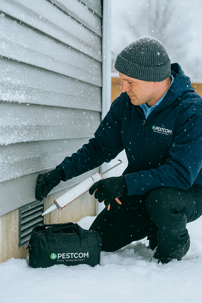
- Treat: apply a label-directed exterior barrier at foundation seams, door and window perimeters, soffit/vent junctions, and other likely entry points - supplementing (not replacing) sealing. Entomology
- Spot-dust key voids (attic perimeters/soffits/utility chases—where allowed) to intercept adults sheltering over winter. Entomology
Home playbook (you can do these between visits)
Seal heat-leaking gaps
- Caulk/foam around windows, doors, siding joints, utility lines; add door sweeps and weatherstripping. MU Extension
Vent screens & covers
- ¼-inch hardware cloth on attic/crawl vents; repair torn insect screening; cap chimneys. exclusives.ca.uky.edu
Crawl space moisture
- Keep poly vapor barrier continuous; address drainage/leaks; keep wood/insulation off damp soil. EPA
Indoors: keep it mechanical
- Vacuum overwintering insects rather than spraying; dispose of bags promptly. OSU Extension Service
When to call a professional
- You’re seeing repeated winter strays at windows/fixtures (likely wall/attic harborages). NC State Extension Homegrown
- You’ve found crawl space moisture, damaged vapor barrier, or vent openings without hardware cloth. EPA
- Multi-unit buildings, schools, and churches need coordinated exclusion plus timed exterior/void treatments to prevent re-seeding. Entomology
What a winter service looks like (Pestcom)
- Inspection & exclusion first: mapping sunny elevations, attic/soffit lines, crawl access, and utility penetrations; sealing prioritized. MU Extension
- Targeted exterior applications (Dec–Feb, weather-permitting): foundation seams, door/window trim, soffits/vents - paired with sealing for best results. Entomology
- Void dusting where appropriate: attic perimeters/soffits/utility chases to intercept sheltering adults before spring activity. Entomology
- Crawl space moisture check: confirm vapor barrier; note fixes to keep humidity down and pests disinterested. EPA
- Spring-ready perimeter: by late winter, the structure is sealed and protected so you don’t get a “first warm week” spike.
Remember
Winter service isn’t about chasing summer pests - it’s about sealing, drying, and protecting the envelope and voids so your home doesn’t become winter housing. Do the tightness and moisture work now, pair it with targeted exterior/void treatments, and spring arrives quiet.
Sources
University of Missouri Extension - Seal your home to keep insects from spending the winter with you: MU Extension
North Carolina State University Extension - Avoid Insect Invaders in Your Home During Winter: NC State Extension Homegrown
University of Kentucky Entomology - How to Pest-Proof Your Home (exterior barrier as a supplement to sealing): Entomology
U.S. EPA - Moisture Control Guidance for Building Design, Construction & Maintenance (crawl space vapor barrier and moisture management fundamentals): EPA